Engineering Research · March 2026

The Micro-Physics of Digital Printing

A deep technical investigation into the engineering systems that govern modern inkjet output: from piezoelectric crystal deformation at the nanoscale to the rheological behavior of pigment suspensions under transient pressure.

2–30picoliter droplet volume
21 kHzmax ejection frequency
1200nozzles per head
Read the Engineering Report
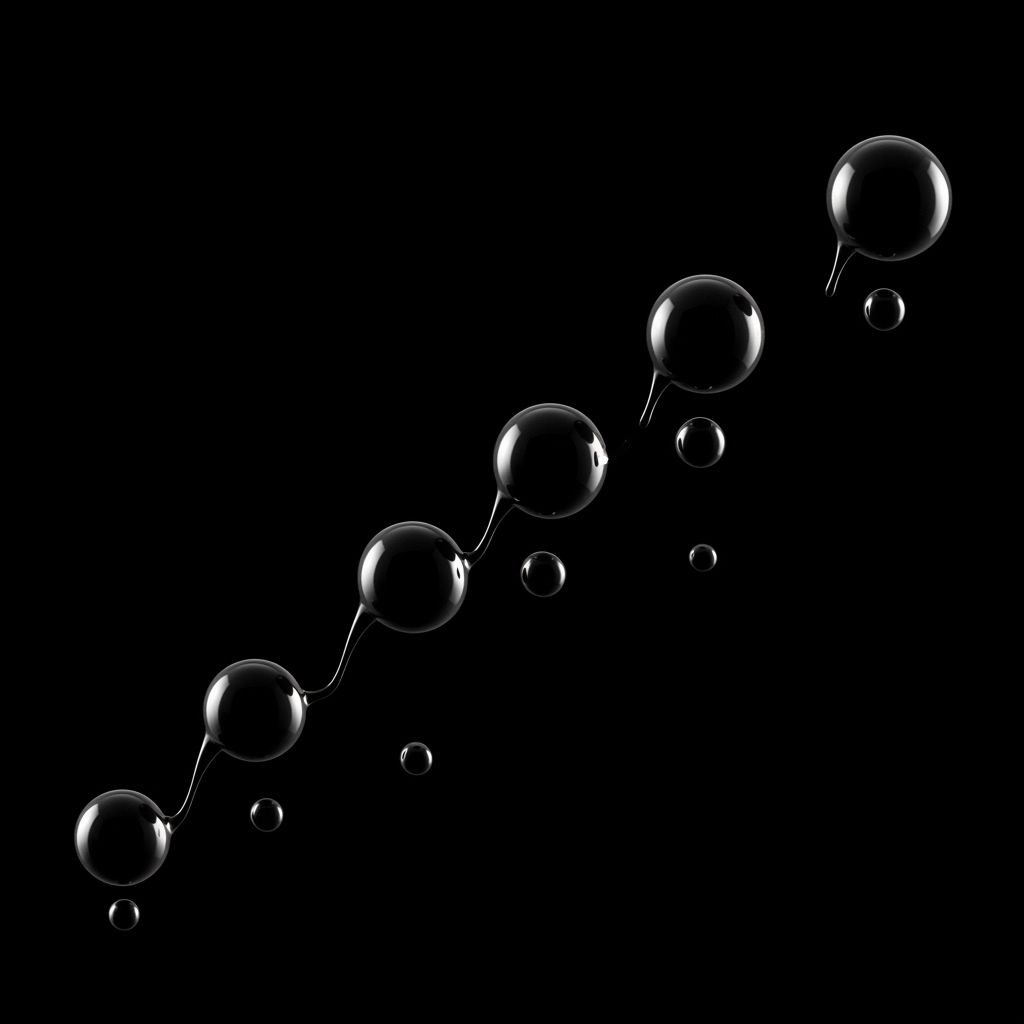
Extreme close-up macro photograph of cyan ink droplet suspended in mid-air against a dark background, showing spherical surface tension and internal light refraction Ink droplet captured at 1/500,000 s · Nozzle exit diameter: 21 µm
Comparative Engineering Analysis

Thermal vs. Piezoelectric Inkjet: A Technical Comparison

The two dominant paradigms in inkjet engineering differ fundamentally in their transduction mechanisms, thermal profiles, and achievable droplet precision.

Parameter Thermal Inkjet (TIJ) Piezoelectric Inkjet (PIJ)
Actuation Mechanism Resistive heater vaporizes ink to form a bubble; bubble collapse ejects droplet Applied voltage deforms a PZT (lead zirconate titanate) crystal, generating a pressure wave
Operating Temperature ~300 °C at the heater element surface (transient) Ambient (20–40 °C); no localized thermal cycle
Ink Compatibility Limited to aqueous inks that tolerate thermal stress; solvents may degrade Broad: aqueous, solvent-based, UV-curable, and high-viscosity ceramic inks
Droplet Volume Control Single fixed volume per nozzle; limited grey-scale via frequency modulation Multi-level waveform control enables 2–30 pL variable-drop technology
Printhead Lifespan Heater element degrades from thermal cycling; heads are typically consumable Crystal fatigue is negligible; printheads are engineered for extended service life
Maximum Ejection Frequency ~8 kHz (limited by bubble nucleation / collapse cycle) Up to 21 kHz with acoustic optimization
Nozzle Density High — MEMS fabrication enables up to 2400 npi Moderate — 180–360 npi typical; industrial heads higher
Manufacturing Cost Low — silicon microfabrication is highly scalable Higher — PZT actuation layer requires precision deposition processes
Typical Application Consumer desktop printing, photo output, office documents Industrial textiles, ceramic tiles, 3D jetting, scientific instrumentation
Fluid Mechanics

Hydrodynamic Behavior of Ink Under Transient Pressure

The formation of a stable, satellite-free ink droplet is governed by the interplay of three competing physical forces: surface tension (which resists deformation of the liquid-air interface), viscosity (which dampens internal flow), and inertia (which drives the jetting motion).

Engineers parameterize this balance using the Ohnesorge number (Oh), defined as the ratio of viscous dissipation energy to the geometric mean of surface tension and inertial energies. For stable jetting without primary droplet fragmentation, the operating window is approximately 0.1 < Oh < 1.0.

The entire ejection event — from the onset of the pressure pulse to the detachment and flight of a discrete droplet — occurs within a window of 20–80 microseconds. High-speed stroboscopic imaging at frame rates exceeding 106 fps has been essential to resolving the ligament retraction and Rayleigh-Plateau instability that govern satellite formation.

~20 µsTypical droplet ejection event duration
Oh: 0.1–1.0Stable jetting Ohnesorge window
8–15 m/sDroplet velocity at nozzle exit
<1 µmDroplet placement accuracy (advanced heads)
High-speed macro photography of cyan and magenta ink streams colliding in mid-air, showing fluid tendrils and droplet formation patterns against a black studio background
Mechanical Engineering

The Mechanics of Paper Transport Systems

Precise paper advancement is as critical to output quality as droplet formation. Modern transport systems must achieve sub-millimeter positional accuracy while operating at sheet velocities exceeding 0.5 m/s.

  • Drive Roller Friction Engineering

    Compliant rubber roller surfaces are engineered with surface energies and Shore A hardness values (typically 40–60) optimized to balance grip against paper deformation. Static friction coefficient targets fall between 0.6 and 0.9 for standard uncoated media.

  • Encoder Strip Resolution

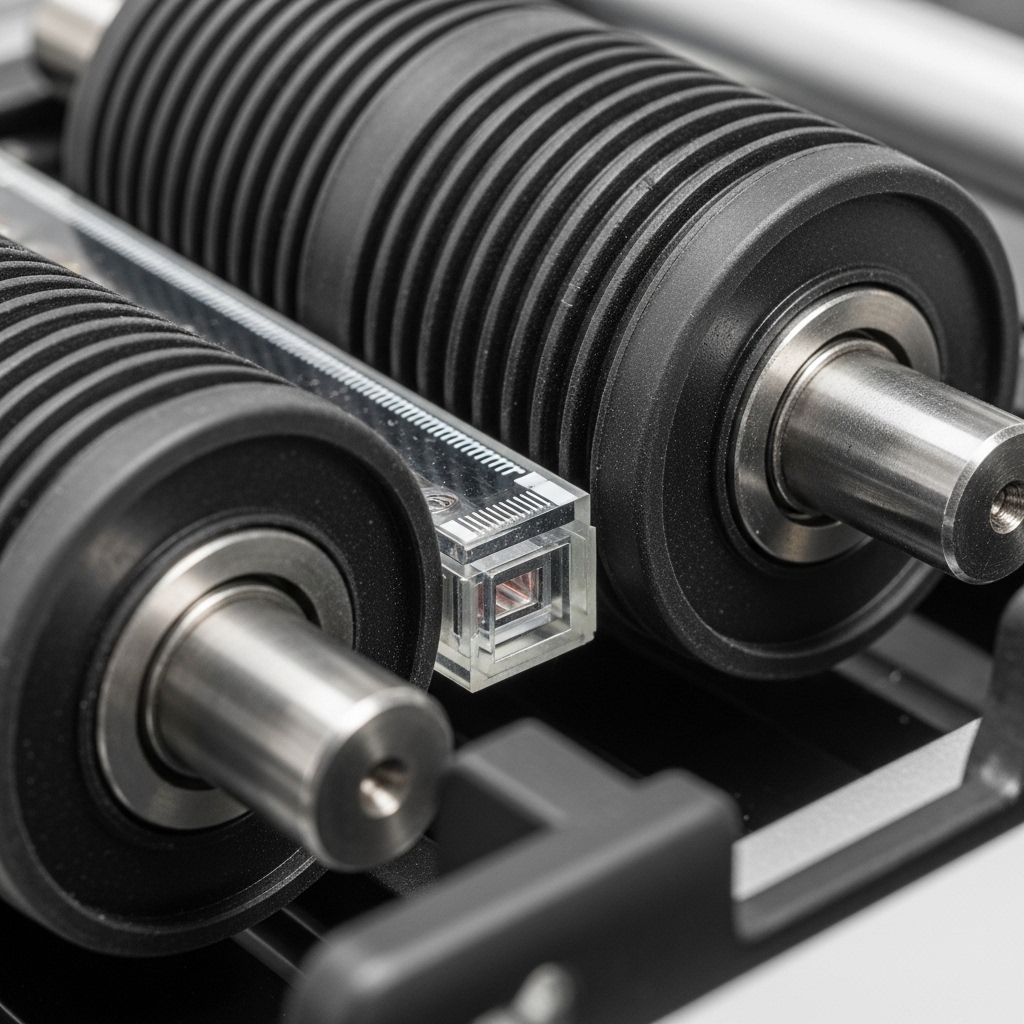
    Linear optical encoders reading a transparent strip with 1200–2400 lpi grating density provide closed-loop positional feedback to the DC servo motor, compensating for roller eccentricity and thermal expansion in real time.

  • Paper Path Geometry and Buckle Control

    The feed path curvature radius must exceed the minimum bending radius for the supported media weight range (typically 60–300 g/m²). A controlled pre-buckle zone before the print platen reduces tension variability during high-speed media transport.

  • Star Wheel and Platen Design

    Spiked star wheels apply minimal contact area above the wet ink zone to prevent smearing, while a precisely flat vacuum-assist platen maintains the paper in the defined focal plane within ±50 µm of the printhead carriage reference surface.

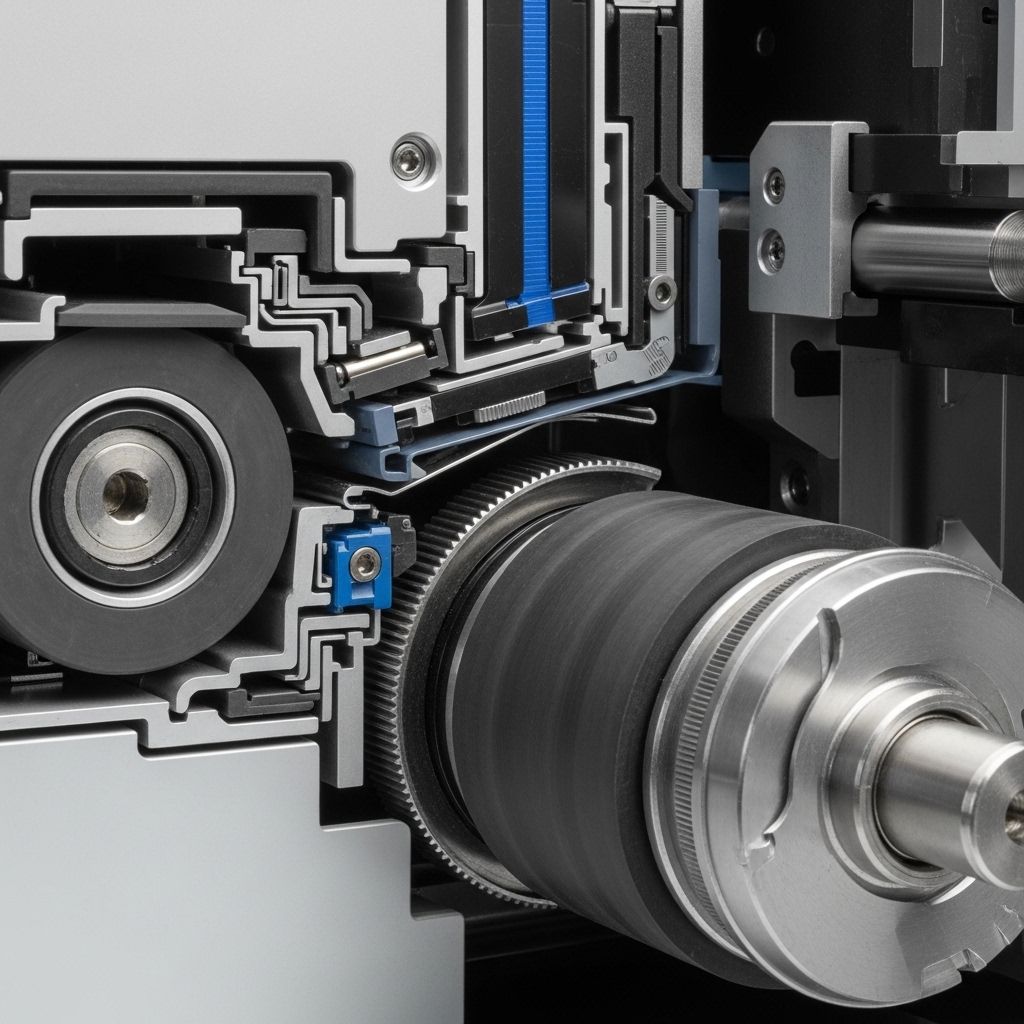
Close-up engineering photograph of precision rubber drive rollers and encoder strip inside a paper transport mechanism, showing metallic shafts and optical grating elements
Historical Engineering Context

The Evolution of Digital Printing Technology

From the first experimental drop-on-demand systems of the 1970s to the multi-picoliter variable-drop architectures of the 2020s.

1951
Continuous Inkjet Origins
Siemens patents the first electrostatic deflection inkjet recorder for medical chart output.
1977
Drop-on-Demand
Zoltan, Kyser, and Sears develop the first piezo-driven DOD printhead at Gould Electronics.
1984
Thermal Bubble-Jet
Canon and HP independently introduce resistive-heater thermal inkjet in the consumer market.
1993
Micro-Piezo Architecture
Thin-film PZT deposition enables high-density nozzle arrays below 20 µm diameter.
2003
Variable Drop Technology
Multi-level drive waveforms achieve 2–30 pL variable-drop volume for photographic gradation.
2012
Single-Pass Production
Fixed-array single-pass heads enable industrial inkjet at speeds exceeding 120 m/min.
2024
Nanoscale Actuation
Sub-2 pL droplet research employs MEMS-fabricated PZT membranes with 50 nm actuation displacement.
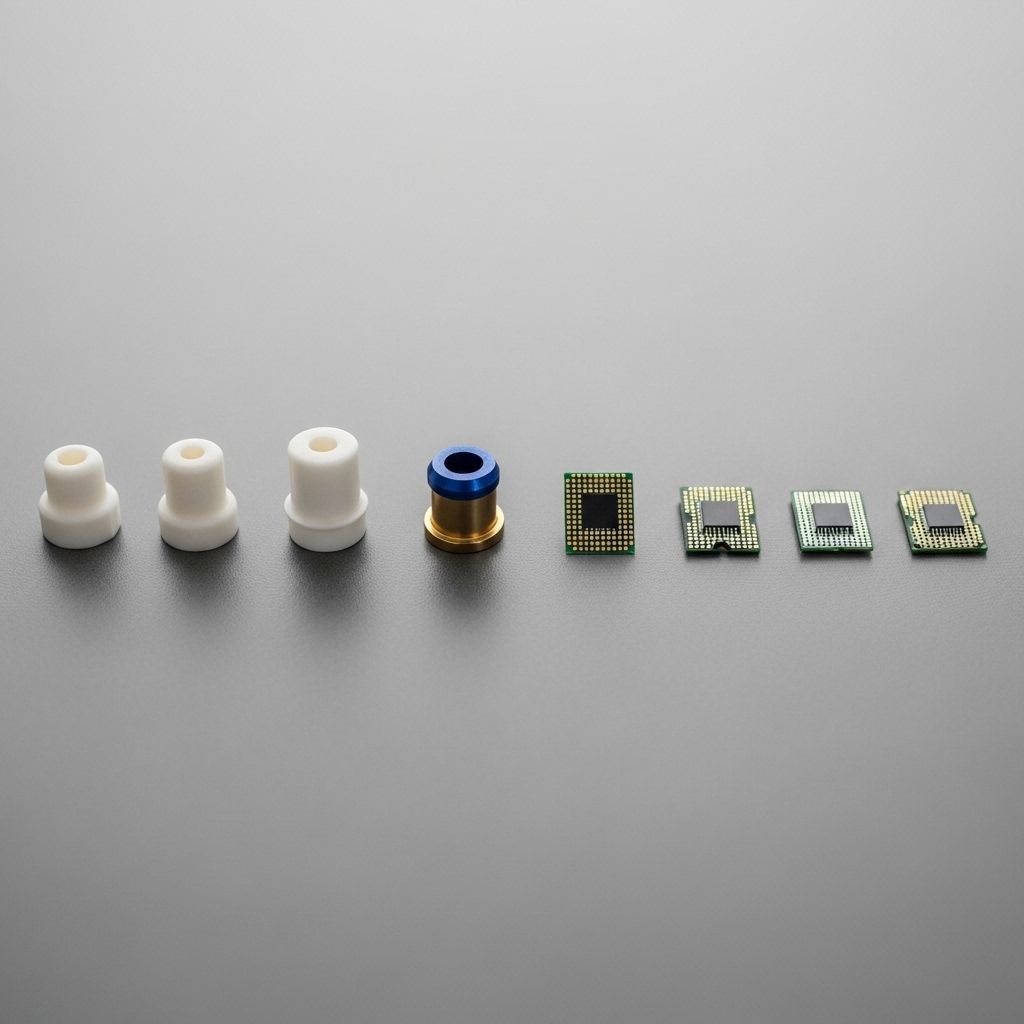
Flat lay of historical inkjet printhead components arranged chronologically on a neutral grey surface, showing evolution from large ceramic actuators to miniaturized MEMS chip arrays
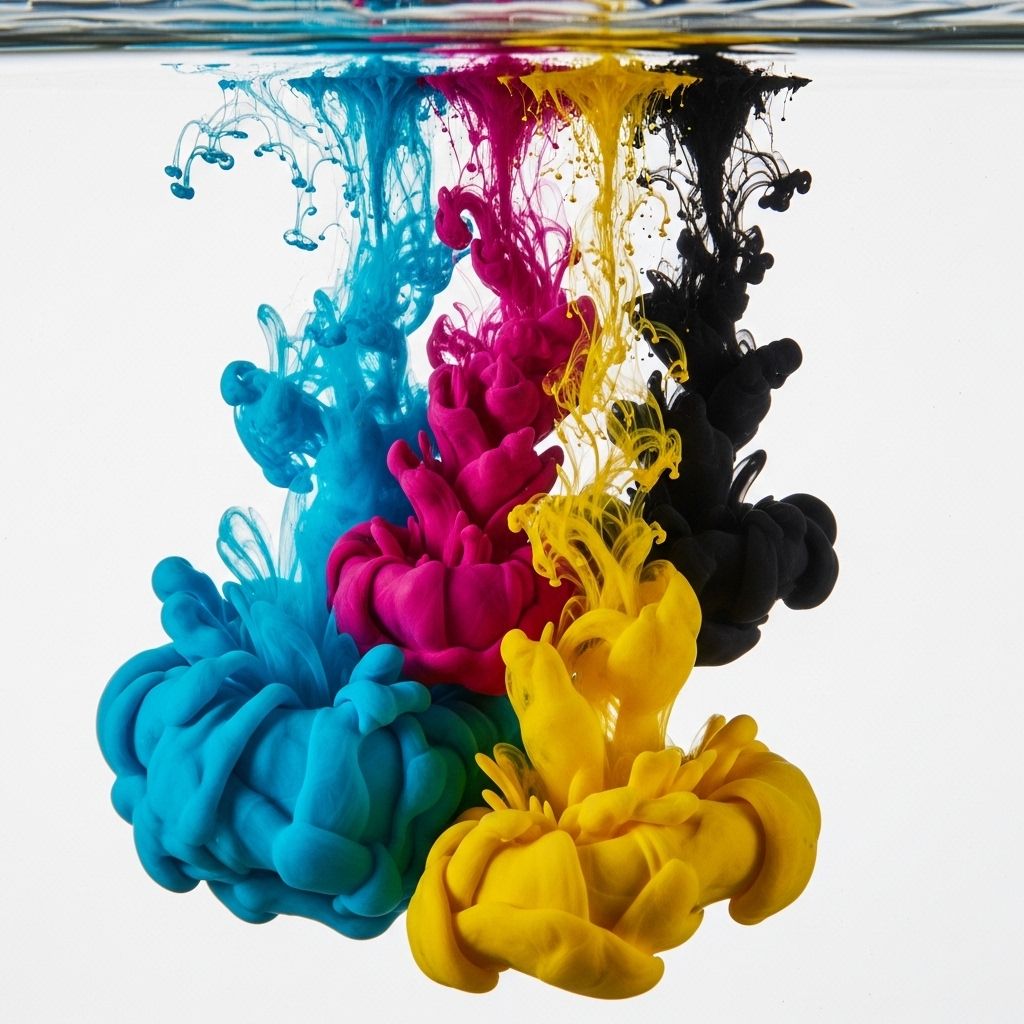
Scientific macro photograph of multiple colored ink drops dispersing in clear water, showing pigment particle diffusion patterns in cyan, magenta, yellow and black forming abstract chemical structures
Materials Science

Chemical Composition of Modern Inkjet Pigment Inks

Contemporary inkjet inks are complex colloidal formulations engineered to satisfy simultaneous and often competing requirements: stable dispersion, controlled rheology, rapid immobilization on substrate, and long-term colorimetric stability.

Pigment vs. Dye: A Colloidal Distinction

Dye-based inks consist of chromophore molecules dissolved at the molecular level in aqueous carrier. Pigment inks, by contrast, contain insoluble crystalline organic particles (typically 100–300 nm median diameter) suspended by steric or electrostatic stabilization. The colloidal architecture determines lightfastness, substrate interaction, and nozzle reliability.

Typical cyan pigment: Copper phthalocyanine (CuPc) · C₃₂H₁₆CuN₈ · Particle d₅₀: 120–180 nm

Carrier Fluid and Co-Solvents

The aqueous carrier typically comprises 50–70% deionized water by mass. Co-solvents (glycerol, 2-pyrrolidone, 1,3-butanediol) at 10–25% suppress evaporation at the nozzle meniscus, preventing the viscosity spike that leads to nozzle blockage. Their concentration directly controls ink surface tension targets of 28–33 mN/m.

Dispersant Chemistry

Polymeric dispersants — typically comb or block co-polymer architectures — adsorb onto pigment particle surfaces via anchor groups (e.g., amine, carboxylate), while hydrophilic stabilizing chains extend into the aqueous phase, providing steric repulsion and maintaining a zeta potential of ±30–50 mV for long-term colloidal stability.

Viscosity target: 2–20 mPa·s at 25 °C · Surface tension: 28–33 mN/m · pH: 7.5–9.5

Latest Research Papers

Featured Engineering Articles

In-depth technical analysis from the EpsonPrinterRepair editorial team, covering the physical sciences underpinning modern digital print systems.

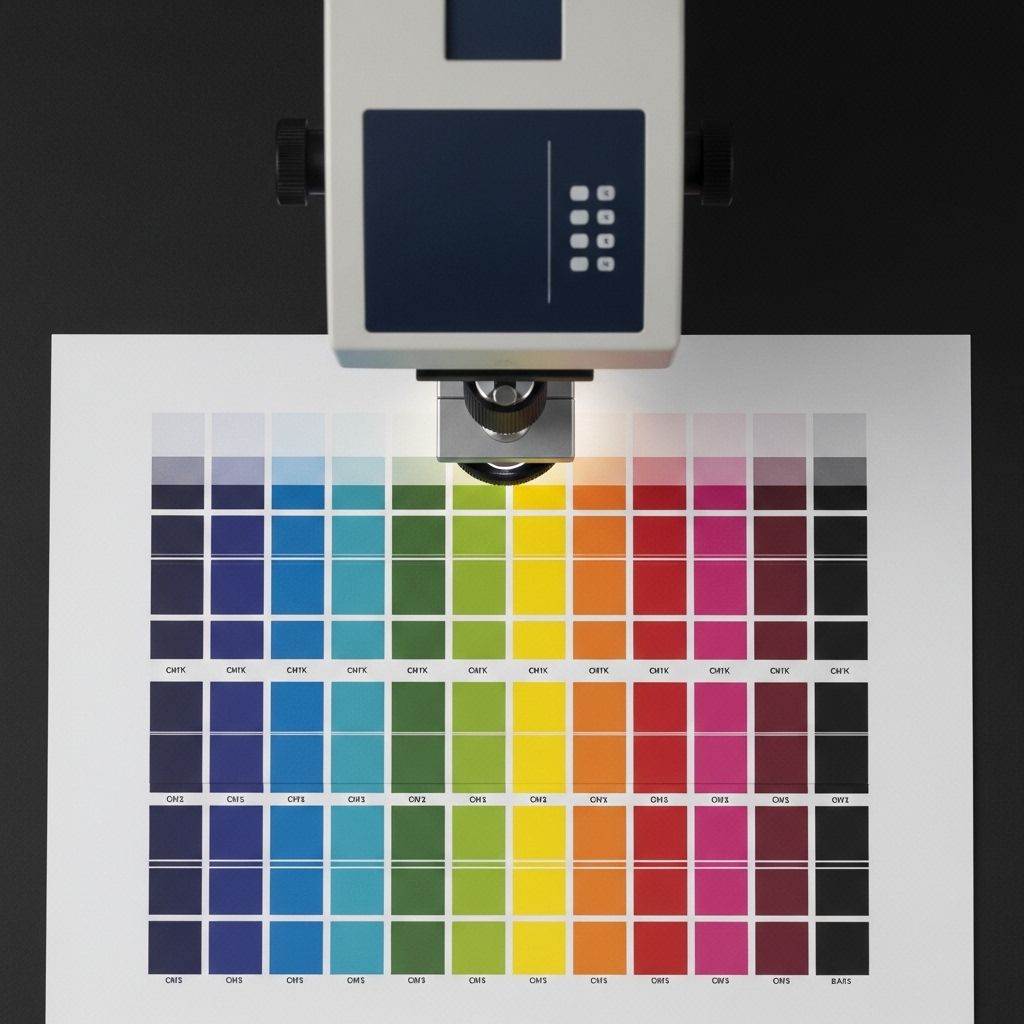
Spectrophotometric measurement setup with color calibration chart showing CMYK ink patches on coated paper stock, arranged in a systematic grid pattern under controlled studio lighting
Color Science

CMYK vs RGB: The Science of Color Reproduction

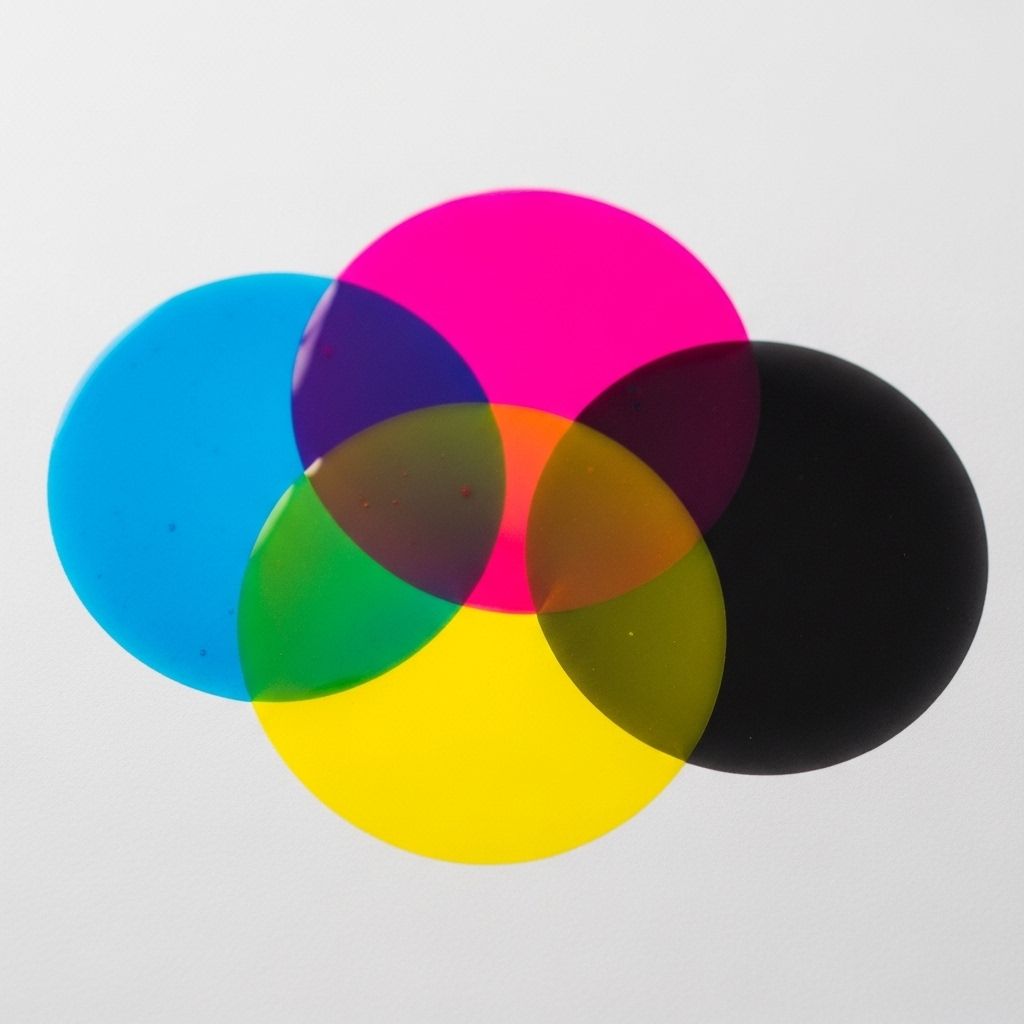
A rigorous examination of subtractive versus additive color models, gamut mapping, and the physics of how pigment layers on paper reconstruct the visible spectrum perceived by the human visual system.

March 2026 Read Report
Engineering FAQ

Frequently Asked Questions on Print Physics

Access the Research Archives

Four in-depth engineering papers covering piezoelectric physics, CMYK color science, ink fluid dynamics, and mechanical paper transport.

Access the Archives